Understanding Binary Options Trading
Binary options trading represents a straightforward way for market participants to engage with financial markets. Unlike traditional trading instruments, binary options offer only two possible outcomes, allowing traders to speculate on the future direction of asset prices. The attraction of binary options partly stems from its simplicity, offering a clear-cut mechanism of predicting whether an asset’s price will rise or fall within a set period. However, this apparent simplicity should not lead investors to underestimate the inherent risks involved, particularly when leveraging strategies like breakout setups.
The Concept of Breakout Setups
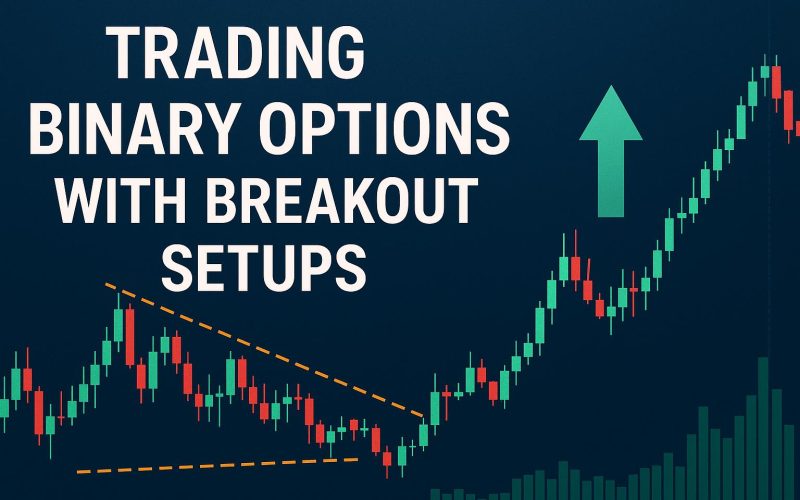
Breakout trading strategies are widely favored by those looking to capitalize on significant price movements. A breakout occurs when the price of an asset decisively moves beyond a set resistance or support level. This movement often indicates a substantial shift in market sentiment, thereby presenting opportunities for traders. The breakout strategy aims to capture these price shifts at critical junctures, expecting an extended upward or downward trajectory.
Identifying Key Levels
Identifying support and resistance levels forms the backbone of any successful breakout trading strategy. These levels are crucial as they often mark the point where price reversals have historically occurred. To effectively pinpoint these levels, traders may employ technical analysis tools. Bollinger Bands and moving averages are among the indicators that can aid in detecting these pivotal price barriers. By setting these levels, traders establish the groundwork for a more comprehensive analysis of potential breakouts.
Validating the Breakout
However, not every breakout is indicative of a new trend. To assess the legitimacy of a breakout, traders often rely on corroborative evidence, such as trading volume. A breakout reinforced by high trading volume suggests that the market shift is backed by strong trader interest and participation, indicating a genuine sentiment change. Another method of confirmation involves observing whether the price revisits the broken level, either as a new support or resistance point. These checks add validity to the breakout, reducing the risk of false signals.
Trading Binary Options with Breakouts
Integrating breakout strategies with binary options trading demands precise timing and execution. The unique challenge lies in binary options’ requirement for predicting price direction within a predetermined timeframe. Therefore, the alignment of breakout strategy with binary options necessitates careful planning and tactical decision-making.
Selecting Appropriate Expiry Times
The choice of expiry times is critical to the success of binary options trading using breakout strategies. The nature of the breakout—whether it is short-term or driven by fundamental changes—dictates the optimal expiry period. Short-lived breakouts may align well with 5-minute or 15-minute binary options, offering swift opportunities for profit. Conversely, longer-term breakouts, which may be underpinned by significant market-wide shifts, might be more suited to one-hour or end-of-day expiry options. Selecting an appropriate expiry time helps tailor the trade to the anticipated duration of the price movement.
Managing Risk
The inherently risky nature of binary options trading necessitates robust risk management strategies. To protect against potential losses, traders should set strict limits on their positions and ensure adequate diversification across their trades. This involves understanding and employing risk management principles to safeguard investments. Implementing such strategies helps in cushioning significant financial setbacks that may occur due to market volatility or unexpected price reversals.
Conclusion
In conclusion, trading binary options using breakout setups offers traders the potential to exploit market volatility effectively. However, this approach requires a thorough comprehension of technical analysis methodologies and disciplined risk management practices. Traders should continually educate themselves on the evolving market dynamics, ensuring they remain informed and adaptable in their strategies. Before transitioning to real-money trading, it is advisable to practice in a demo environment, providing a controlled setting to hone skills and refine trading approaches. For those interested in expanding their knowledge of specific indicators and additional trading strategies, exploring resources from seasoned trading educators or reputable financial market platforms can offer valuable insights and enhance trading acumen.
This article was last updated on: May 29, 2026