Understanding Binary Options in Range Bound Markets
Binary options are a type of financial derivative that provide a fixed payout based on a yes/no proposition. This proposition typically pertains to whether an asset’s price will exceed or fall below a predetermined level—known as the strike price—at the option’s expiration. When contemplating trading binary options in range bound markets, it is imperative to grasp both the unique characteristics of such markets and the complexities involved in binary options trading.
What is a Range Bound Market?
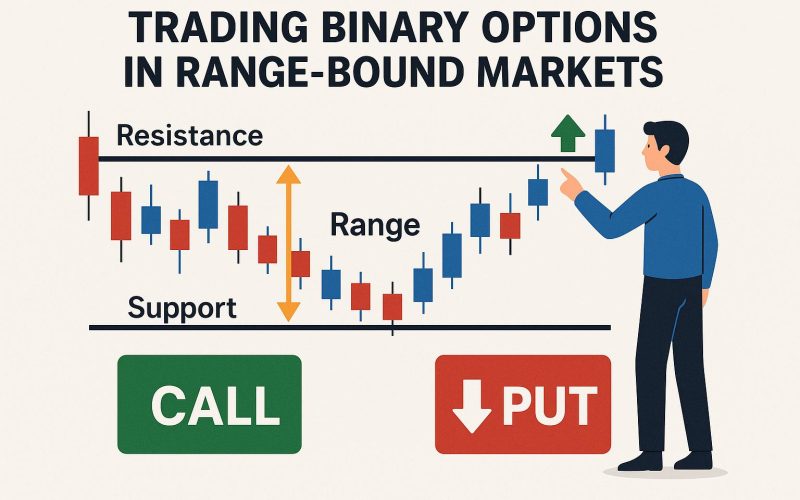
A range bound market is characterized by the consistent oscillation of a financial asset’s price between two defined levels, often referred to as resistance and support. These levels act as barriers that the price tends not to breach, resulting in a horizontal trading pattern. In these markets, identifying long-term trends is challenging due to the lack of persistent directional movement. However, for traders capable of leveraging short-term price fluctuations, these markets can present profitable opportunities.
Tactics for Trading Binary Options
Range Identification
Understanding and locating the resistance and support levels are paramount when trading in range bound markets. These levels define the upper and lower bounds within which the price moves. Traders can strategically use these levels to their advantage; for instance, entering “call” options (which predict a rise in price) when the asset price is near the support level, and “put” options (predicting a price decline) when the asset nears resistance. Successful identification of these levels significantly impacts the effectiveness of any trading strategy.
Timeframe Consideration
Binary options offer a wide variety of expiration timeframes, ranging from very short-term durations—mere minutes—to much longer terms that span hours or even days. Choosing the correct timeframe is critical and should depend on the volatility observed within the specified range. Shorter timeframes may suit highly volatile markets, offering quick entry and exit opportunities, whereas longer-term positions might be preferable in more stable environments.
Risk Management
Implementing robust risk management strategies is indispensable while trading binary options. It is crucial to establish predetermined entry and exit points to mitigate potential losses and safeguard the trading capital. Moreover, allocating only a segment of the total trading capital to each trade minimizes exposure and spreads the overall risk. Stringent risk management techniques help cushion against the inherent unpredictability of financial markets.
Potential Challenges
Lack of Trend Direction
Trading in range bound markets inherently lacks a clear trend, which can sometimes result in indecisive market behavior. This indecisiveness makes predicting potential outcomes trickier, potentially resulting in false signals that could mislead traders.
Breakout Risks
While range bound markets are marked by the restricted movement of prices within defined boundaries, unexpected breakouts can and do occur. Such breakouts entail the price moving beyond identified resistance or support levels, leading to unforeseen losses if trades are not correctly positioned or if adequate protective measures are not in place.
Conclusion
Engaging in binary options trading within range bound markets necessitates a detailed understanding of specific market dynamics and the effective application of tailored trading strategies. Precision in range identification, thoughtful selection of appropriate timeframes, and diligent risk management are vital components for traders aiming to capitalize on range bound conditions. Continuing education through reputable financial resources and platforms can provide additional insights, tools, and detailed guidance on binary options trading to aid traders’ success in navigating these market environments.
This article was last updated on: June 25, 2026