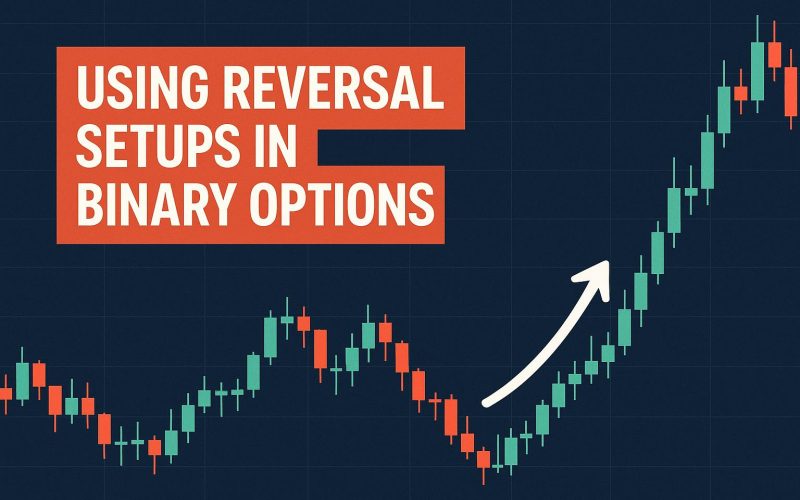
Understanding Reversal Setups in Binary Options Trading
Binary options trading has become a favored approach within the financial markets, offering a straightforward method wherein traders predict the price movement of an asset over a specific period. Among the myriad of strategies available to traders, identifying reversal setups stands out as a compelling approach. Delving into the realm of reversal setups reveals not only what these setups entail but also how traders can adeptly utilize them within the context of binary options trading.
What Are Reversal Setups?
Reversal setups represent instances in trading where an existing price trend is anticipated to switch directions. Pricing within financial trading is inherently volatile, driven by diverse factors such as market sentiment, economic data releases, geopolitical events, and more. Amidst these fluctuations, the ability to pinpoint potential reversal points offers traders promising opportunities. Recognizing these setups necessitates a keen analysis of price patterns, candlestick charts, and various other technical indicators to foresee when a reversal may occur.
Common Reversal Patterns
Traders often employ specific patterns that are commonly regarded as signals for potential reversals. While not exhaustive, some of the frequently observed patterns include:
Head and Shoulders: An iconic reversal pattern, the head and shoulders pattern signifies a trend reversal, typically from bullish to bearish. It is delineated by three successive peaks, where the middle peak, symbolizing the ‘head’, is flanked by two smaller ‘shoulders’.
Double Tops and Bottoms: These patterns are indicative of a reversal following a consolidation phase. A double top suggests an impending reversal from an uptrend, while a double bottom signals a potential reversal from a downtrend. These patterns form when the price hits the same resistance or support level multiple times.
Engulfing Patterns: Engulfing patterns emerge when a smaller price candle is followed by a larger candle, which completely envelops the prior one. This pattern highlights significant market pressure, either buying or selling, hinting at a potential reversal.
Technical Indicators and Reversal Setups
Beyond price patterns, technical indicators serve as essential tools in confirming potential reversals:
Relative Strength Index (RSI): As a momentum oscillator, the RSI assesses if an asset is overbought or oversold, conditions which often precede a market reversal. An RSI above 70 suggests overbought conditions, whereas below 30 indicates oversold conditions, hinting at a potential price reversal.
Moving Average Convergence Divergence (MACD): This trend-following momentum indicator evaluates the interaction between two moving averages of a security’s price. Crossovers of the MACD line with the signal line can indicate potential reversals in trend.
Bollinger Bands: Designed to signal overbought or oversold conditions in the market, Bollinger Bands use a moving average with two standard deviation levels. When prices persistently touch or move outside these bands, it can indicate an upcoming reversal due to unexpected volatility.
Implementing Reversal Setups in Binary Options
Reversal setups can be methodically implemented in binary options trading through sequential steps that enhance the potential for successful trades:
Identify a Potential Reversal: Utilizing the aforementioned patterns and indicators, traders can spot potential reversal junctures. The timely identification of these points can importantly inform a trader’s next moves.
Confirm the Reversal: Prior to committing to a trade, securing confirmation through additional indicators or broader market analysis mitigates the risk of acting on a false signal.
Select Appropriate Timeframes: Reversal setups manifest across various timeframes, necessitating the selection of timeframes that align with the expiration period of the binary option to optimize trade success.
Risk Management: Employing robust risk management strategies is quintessential in trading, particularly with the inherent risks involved in identifying reversals. This involves capping investment amounts for each trade to prevent significant losses.
Challenges of Using Reversal Setups
Incorporating reversal setups in binary options trading, while fruitful, presents several challenges that traders must navigate:
False Signals: Even meticulously identified reversals may not always lead to a sustained change in price direction, occasionally resulting in erroneous trades and potential losses for traders.
Market Volatility: The complex nature of high volatility markets can lead to disruptive price movements, which can obscure genuine reversal points, making identification significantly more challenging.
Requires Skill: A deep understanding of market data and technical indicators is essential for those looking to master reversal trading techniques. This level of expertise comes with time, experience, and dedication to study.
Conclusion
Reversal setups can be an instrumental strategy in the realm of binary options trading, unlocking opportunities to capitalize on shifts within market trends. A comprehensive understanding of reversal patterns, the strategic use of technical indicators, and solid risk management practices constitute vital components of a triumphant trading plan. For a deeper exploration of various trading strategies, traders may consider consulting established resources like Investopedia or BabyPips. In doing so, traders can cultivate a more profound comprehension of market dynamics and bolster their trading acumen within the exciting world of binary options.
This article was last updated on: July 31, 2026