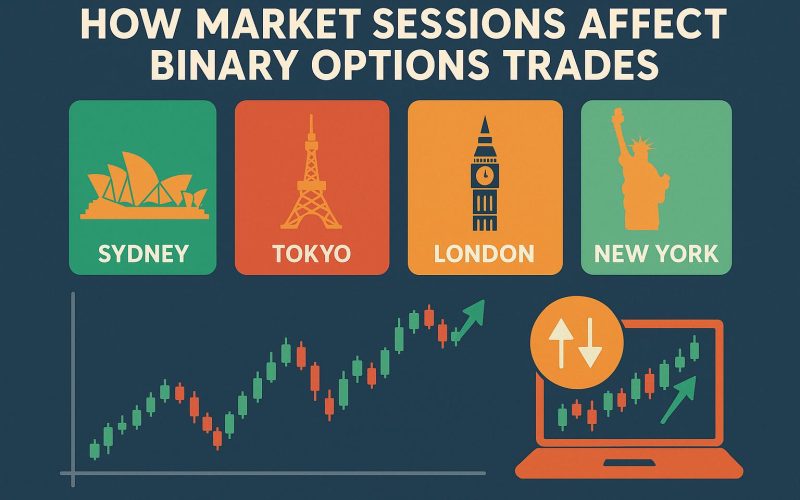
The Influence of Market Sessions on Binary Options Trading
Binary options trading is intimately tied to market sessions, as each session has its own characteristics that can influence trading strategies and outcomes. Understanding how these sessions affect trading can assist in making more informed decisions and potentially improving trade success.
Understanding Market Sessions
Global financial markets operate across different time zones, creating distinctive sessions throughout the day. The primary market sessions to be aware of are the Asian, European, and North American sessions. Each session has its unique trading dynamics that can impact binary options.
Asian Session: Typically starting in Tokyo, this session is characterized by lower volatility compared to others. Currency pairs involving the yen and Australian dollar may present more trading opportunities. Traders focused on Asian market currencies might find a steadier environment with less dramatic swings in price.
European Session: Commencing in London, this is one of the busiest trading periods. High liquidity is common, and many market announcements can cause significant price movements, leading to numerous binary options opportunities. The session is known for its dynamic and fluid market conditions, often setting off trends that can continue into the overlap with the North American session.
North American Session: This session opens in New York and often overlaps with the European session, resulting in heightened market activity and volatility. USD-based currencies frequently exhibit considerable movement, providing traders with potential profit avenues. This session is particularly known for its bursts of market activity, influenced by significant economic announcements.
Volatility and Trading Opportunities
The level of market volatility during different sessions can greatly affect binary options trades. Higher volatility, as seen during the European and overlapped North American sessions, can offer more lucrative but riskier trading opportunities due to the larger price movements. Conversely, the Asian session often provides a steadier trading environment with smaller price fluctuations.
Understanding the nature of market volatility is crucial for binary options traders. During periods of high volatility, prices can change swiftly, presenting both challenges and opportunities. For instance, sharp movements in the market can generate quick profits for traders who correctly anticipate price directions. However, it also increases the potential for losses should the market move against the trader’s position.
Impact on Strategy
Traders might adapt their strategies based on the characteristics of each market session. For instance, during high-volatility periods, such as the European session, traders might employ strategies that capitalize on rapid price changes. Strategies like trend following or breakout strategies might be more effective during these periods due to the pronounced price movements.
Meanwhile, during the calm Asian session, range-trading strategies might be more effective, as prices tend to oscillate within a defined range. Traders can capitalize on smaller, predictable price movements, employing strategies that benefit from market stability. Understanding when to apply specific strategies can greatly influence trading success.
Economic Announcements
Market sessions are punctuated by economic announcements that can significantly affect trading. Important economic indicators and news releases are typically scheduled during active trading hours of each session. For instance, European economic data releases will affect the European session, while U.S. data impacts the North American session. These announcements can create brief periods of increased market volatility, presenting both challenges and opportunities for binary options traders.
Traders often prepare for major economic announcements by analyzing forecasts and previous data to anticipate market reactions. In doing so, they can position themselves to benefit from the resultant market movements. However, economic announcements can also result in unexpected volatility, necessitating robust risk management practices.
Active Currency Pairs
Each market session influences different currency pairs, depending on the regions the session affects. For example, the Euro (EUR) tends to be more volatile during the European session. Understanding which currencies are traded more robustly during each session helps traders make informed predictions on price movements.
By focusing on the most active currency pairs, traders can adapt their strategies to exploit the ensuing volatility. Selective trading of currency pairs that are in focus during their respective sessions can enhance the trader’s ability to effectively manage risk and capitalize on price fluctuations.
By recognizing how market sessions impact binary options trading, traders can optimize their strategies and timing. Adjusting for the different volatility and activity levels across sessions can lead to better decision-making and potentially enhance trading results. For comprehensive insights on financial trading strategies that align with different market sessions, consider consulting reputable financial resources such as Investopedia.
Conclusion
In conclusion, the interplay between market sessions and binary options trading cannot be overstated. Each session brings its own rhythm and opportunities, influenced by world events, economic announcements, and the intrinsic nature of financial markets. By honing an awareness of these sessions and tailoring their strategies accordingly, traders can potentially navigate the complexities of binary options trading with greater efficacy. The methodical approach encompasses understanding session-specific volatility, timing trades to coincide with major events, and selecting optimal currency pairs for trading. By systematically applying these principles, binary options traders may improve their prospects for successful trading outcomes.
This article was last updated on: April 17, 2026