Introduction
Binary options trading can be a complex undertaking that requires traders to meticulously track their activities for better decision-making and improved trading outcomes. Keeping a detailed binary options journal is crucial for enhancing your trading strategy, identifying patterns, and maintaining discipline. Below are the vital elements you should consider when creating and maintaining a binary options journal.
Trade Details
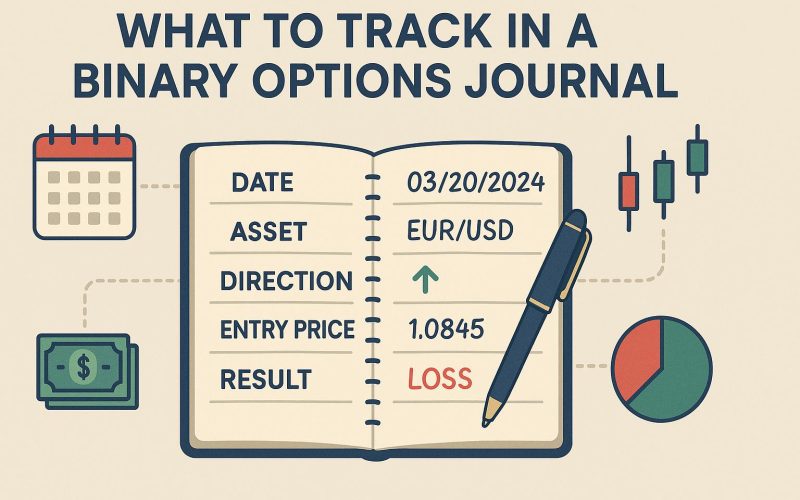
Building a robust binary options journal begins with documenting meticulous details of each trade. Every transaction within your trading activities must be recorded with precision to provide a clear chronological history of your actions in the market.
Date and Time
Recording the date and time of each trade is fundamental. This practice allows you to connect your trades to specific market conditions during those times. The sequence of events and the timing of your transactions can significantly influence the outcome, requiring traders to understand how timing impacted their decisions.
Asset Information
A comprehensive binary options journal will include specific asset information for each trade. Assets could range from currencies and commodities to indices and stocks, representing various asset classes. Documenting the assets traded helps track performance across different markets and highlights strengths and weaknesses in trading specific instruments. Additionally, noting the strike price provides further insight into the potential profitability of the trade, serving as a benchmark against market movements.
Trade Direction and Expiry Time
Another critical component of your journal involves noting the trade direction and expiry time. Whether you placed a call or put option needs to be recorded to evaluate your strategy’s effectiveness. This information aids in understanding which trade directions are contributing positively to your overall results. The expiry time is another vital metric, as it helps determine which trade durations yield optimal outcomes, allowing for adjustments in strategy as needed.
Rationale and Analysis
Understanding the foundation of each trade is crucial, and documenting the rationale behind your trades is an invaluable exercise in self-assessment. Within your journal, include a detailed explanation of why you chose to enter each trade. Capture not just the ‘what,’ but also the ‘why’ and ‘how’—why you believed the trade was worthwhile, the analysis you conducted, and which indicators or patterns influenced your decision. This level of detail allows you to reflect on each decision and identify strategies that consistently produce desired outcomes.
Market Conditions
Diving deeper into the context surrounding your trades, it’s vital to note the market conditions at play when entering a trade. These can include prevailing volatility levels, significant economic announcements, and any global news events impacting the market landscape. Understanding the environmental factors at the time of your trades can assist in not only evaluating past decisions but also in forecasting and preparing for similar conditions in future trading scenarios.
Outcome and Reflection
For each trade, the documentation of the outcome is just as important as the analysis that preceded it. Was the trade profitable, or did it result in a loss? Calculating the payout and its impact on your trading balance gives a quantifiable measure of your performance. Beyond mere numbers, reflecting on the results can yield insights into the effectiveness of your strategies and reveal trends in trading performance over time.
Emotional Analysis
One often overlooked but critical aspect of trading is the role of emotions. Make a habit of reflecting on any emotions experienced during the execution of your trades. Emotional states can significantly influence decision-making, trade execution, and adherence to strategy, making emotional analysis an essential component for developing discipline and improving the reliability of your trading approach.
Key Takeaways
To solidify your learning and development as a trader, it’s beneficial to summarize each trading experience with key takeaways. This section should encapsulate any lessons learned, observations noted, or adjustments to be made in your approach to future trades. The insights gained in this section can serve as a foundation for crafting your personal trading guidelines and help build a strategic road map for continued improvement.
Continual Improvement
Maintaining and regularly updating your binary options journal fosters a culture of continual improvement. As you consistently document and reflect upon your trades, you develop a comprehensive resource that enhances individual trade analysis and augments your overall trading strategy progressively. Make it a practice to review your journal periodically, identifying recurring themes or areas for improvement, ensuring it stays a valuable tool in your trading pursuits.
In conclusion, integrating a structured method of journaling into your binary options trading routine can significantly impact your trading intelligence and success. For more information on trading journals and strategies, consider delving into other reliable resources to further augment your knowledge and skills.
This article was last updated on: September 18, 2026