Understanding Binary Options Expiry
In the domain of financial trading, binary options present a unique form of investment, offering traders a straightforward proposition: predict whether an underlying asset will rise or fall in value over a defined period. Central to this trading instrument is the expiry time. This crucial component dictates the length of time a binary option runs before it reaches settlement, thereby influencing whether a trader makes a profit or incurs a loss. Like any investing practice, binary options trading requires an in-depth comprehension of its diverse elements, with expiry time standing as a pivotal factor in shaping trading strategies and their subsequent outcomes.
Introduction to Short Expiry Binary Options
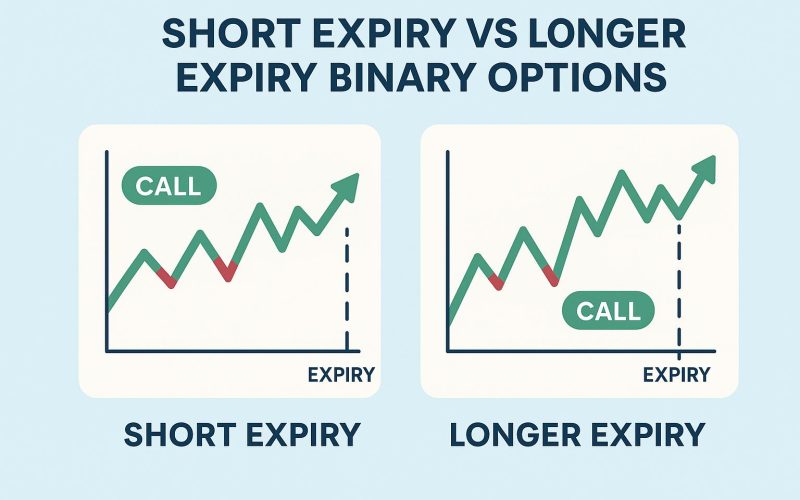
Short expiry binary options, as the term suggests, involve brief timeframes for contracts, typically spanning from as short as 30 seconds to a few minutes. This form of trading is particularly attractive to investors who wish to exploit quick market shifts. The allure of short expiry options lies in its potential for speedy returns. However, these rapid trades demand traders to react quickly to market indicators and trends.
To illustrate, consider a trader who predicts that the price of a stock will increase within the next minute. If their prediction proves correct upon expiry, they stand to gain a profit. However, incorrect assumptions can lead to losses just as swiftly. Due to these factors, short expiration periods are suited for those who thrive on fast-paced decision-making and are comfortable navigating unpredictable market contexts.
Exploring the Nature of Short Expiry Binary Options:
The advantages of trading short expiry binary options can be considerable for experienced investors. These include a potentially higher trading frequency that allows for executing multiple trades over a brief timespan, and the ability to swiftly realize profits and losses— an advantage when operating in volatile markets.
On the contrary, this trading style poses its own set of challenges. The main hurdle is the increased risk brought about by market volatility and the restricted timeframe to adjust one’s strategy. Consequently, it mandates precise market evaluation and astute decision-making within condensed windows of opportunity. Ensuring profitability in such circumstances calls for an understanding of market dynamics and quick reflexes to seize favorable trading positions.
Diving into Longer Expiry Binary Options
Conversely, longer expiry binary options involve contracts that last considerably longer, ranging from several hours to even months. This approach is more appropriate for traders who favor a measured trading style, absorbing insights from both technical and fundamental market analysis to guide their investments. These traders benefit from a more stable framework to develop strategies, reducing the influence of short-term volatility and affording ample time to react to substantial market shifts.
Advantages and Challenges of Longer Expiry Binary Options:
The primary advantage of opting for longer expiry options is the alleviation of immediate market fluctuations providing a stable environment in which to operate. With more time, traders can engage in thorough technical and fundamental research, fundamentally calibrating their investments towards long-term trends rather than fleeting market temptations.
However, despite the inclination towards stability and detailed analysis, longer expiry options also harbor challenges. The extended periods before trade resolution may deter those who are inclined toward seeking swift trading rewards. Traders also face the risk of becoming complacent towards market changes over these prolonged durations, possibly leading to oversight on critical movements in the market landscape, which could adversely affect their trade positions.
Evaluating Expiry Choices: Short versus Long
Whether a trader opts for short or longer expiry binary options often depends on individual preferences, threshold for risk, and a comprehension of market mechanisms. Traders seeking exhilarating, rapid-fire experiences tend to prefer short expiries, whereas they appreciate the thrill and high stakes involved. In contrast, traders who engage in comprehensive analysis and deliberate strategy planning might see the benefits of longer expiry options, where reflective decision-making is possible.
Essential Factors for Determining Expiry Times:
Several considerations can guide traders in selecting the suitable expiry times for their strategies:
1. **Risk Management:** Comprehending one’s risk-tolerance is crucial. While short expiry options can be associated with increased risks due to their rapid nature, longer expiries offer a buffer, shielding against abrupt market volatilities.
2. **Market Conditions:** A key determinant in expiry choice involves evaluating current market conditions. Volatile market situations may pair better with short expiration periods, providing opportunities to harness short-term trends. In contrast, more stable market environments could be advantageous for longer expiration strategies.
3. **Trading Objectives:** Setting clear trading objectives ensures the alignment of expiration choices with goals. If swift profit generation is the aim, shorter expiries might align better, while objectives centered around long-term portfolio building may necessitate longer expiration periods.
Conclusion
A thorough understanding of the divergence between short and longer expiry binary options is indispensable for a trader seeking effective investment practices. Each expiry type possesses distinct benefits and challenges, addressing a variety of trading preferences and playstyles. Successful binary options trading typically entails versatility in approach—judiciously choosing between short and long expiry options based on prevailing market conditions and personal trading strategies to optimize returns. For a more comprehensive deep dive into trading strategies, Investopedia’s resources serve as a valuable repository of knowledge on options trading.
This article was last updated on: April 10, 2026